
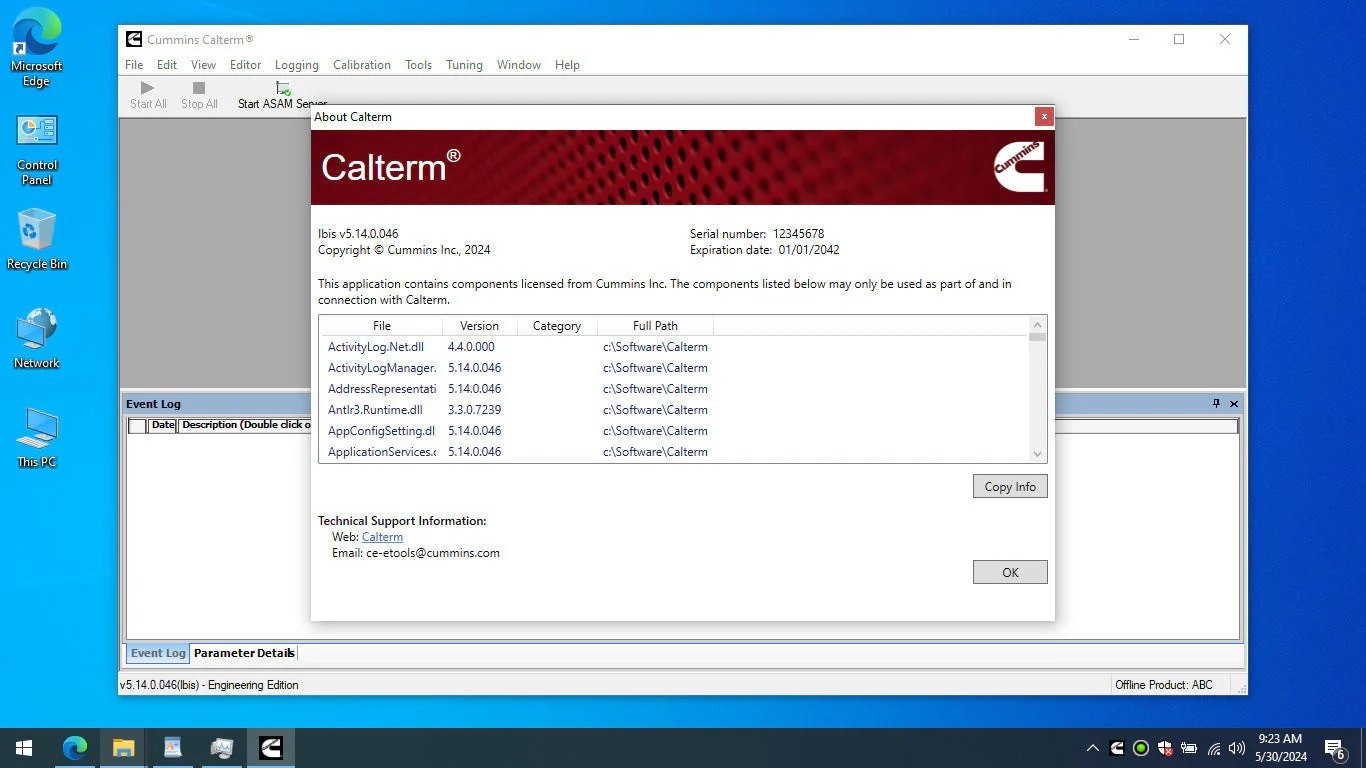

Cummins Calterm is a sophisticated software application designed to enhance the performance of diesel engines by providing advanced diagnostic and calibration capabilities. This software, developed by Cummins Inc., serves as an invaluable tool for technicians and engineers who are tasked with maintaining and optimizing diesel engines. By leveraging the features of Cummins Calterm, users can achieve significant improvements in engine efficiency, emissions control, and overall performance.
At its core, Cummins Calterm is engineered to facilitate deep interaction with an engine’s electronic control module (ECM). The ECM acts as the brain of modern diesel engines, controlling various parameters such as fuel injection timing, air intake, exhaust gas recirculation (EGR), and turbocharger boost levels. With Calterm’s comprehensive suite of tools, users can access real-time data from these systems and make precise adjustments that lead to enhanced engine performance.
One of the primary ways in which cummins calterm software improves diesel engine performance is through its calibration capabilities. Calibration involves fine-tuning the engine settings to optimize power output while minimizing fuel consumption and emissions. This process requires a detailed understanding of how different components interact within the engine system. Through Calterm’s intuitive interface, technicians can adjust parameters such as fuel maps and timing curves based on specific operational requirements or environmental conditions. These adjustments ensure that the engine operates at peak efficiency across various load conditions.
Another critical aspect where Cummins Calterm excels is diagnostics. Diesel engines are complex machines with numerous moving parts that must work harmoniously for optimal operation. When issues arise—such as unexpected power loss or increased emissions—it becomes crucial to diagnose them swiftly to prevent further damage or inefficiency. Cummins Calterm provides robust diagnostic tools that allow users to read fault codes generated by the ECM quickly. It offers detailed insights into potential problems within subsystems like fuel delivery or emission controls so they can be addressed promptly.
